Ad Campaign Platform
Client
Best Buy
Role
Product Designer
Timeline
March - October 2025
Users
Marketplace vendors
Overview
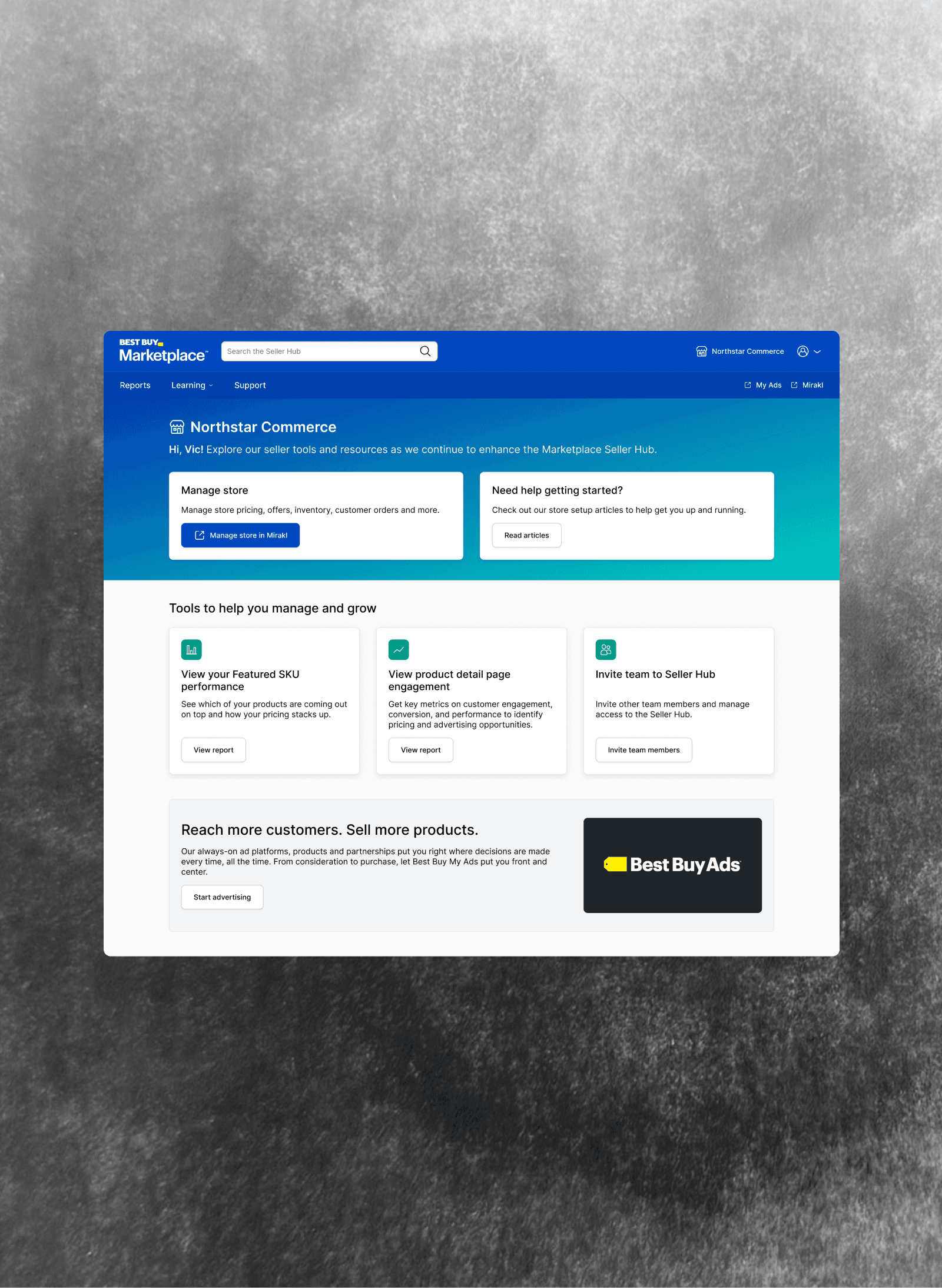
Best Buy Marketplace allows third-party vendors to sell products directly on BestBuy.com, expanding the retailer’s online assortment. Its advertising platform enables those vendors to create, monitor, and optimize campaigns that drive visibility and revenue. As Marketplace adoption grew, the ad platform needed to support more complex workflows and larger volumes of performance data.
My Role
I contributed to improving the structure and usability of core dashboard experiences, with a focus on creating consistent layouts and scalable interaction patterns. Working closely with Product, Engineering, UX Research, and Design Systems, I helped align design decisions with both vendor workflows and technical constraints. This collaboration ensured improvements could ship incrementally while establishing a stronger foundation for future iteration.
Problem
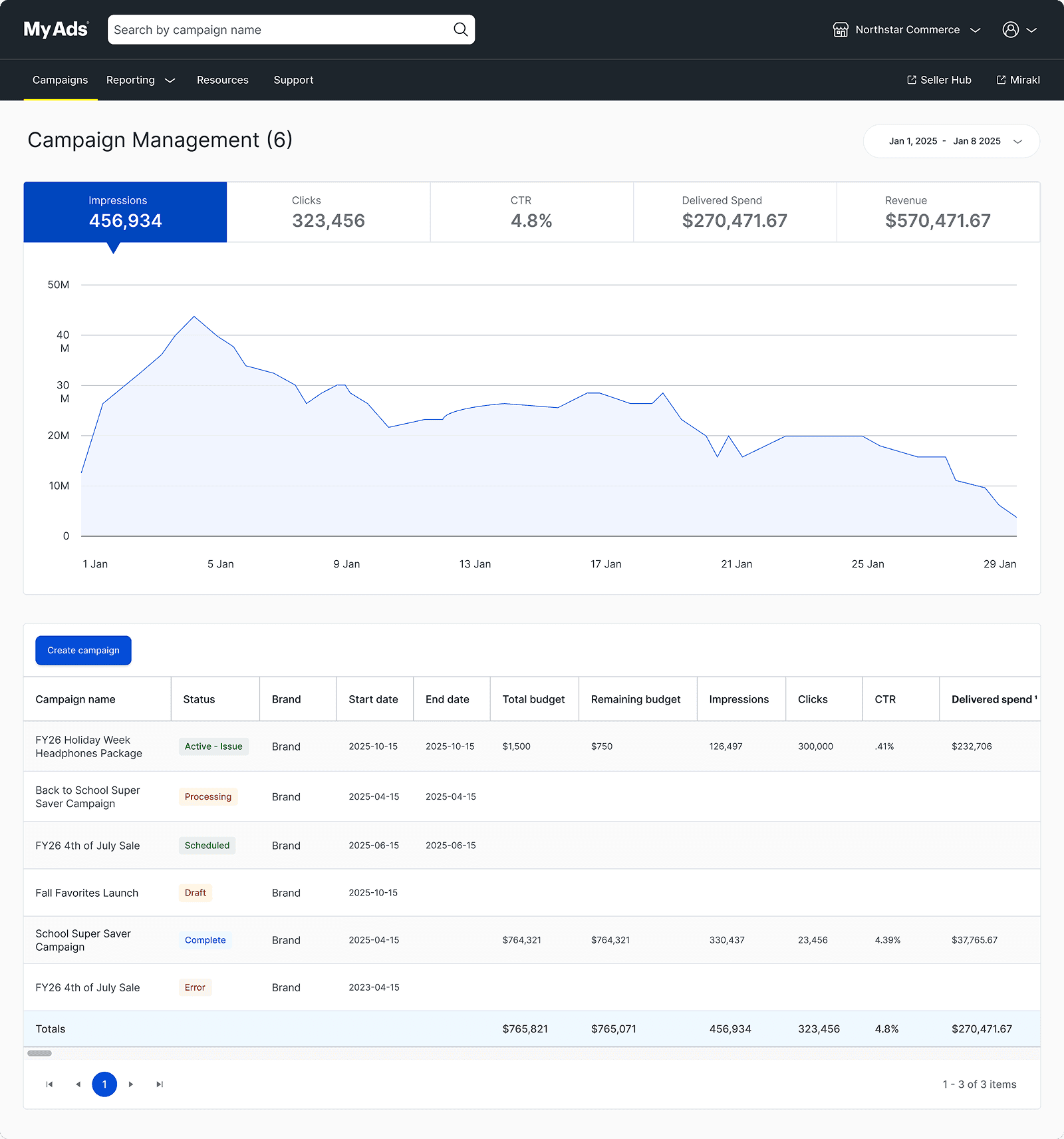
As new features were introduced over time, the platform’s structure became increasingly fragmented, with inconsistent layouts and interaction patterns across dashboards. Vendors managing multiple campaigns struggled to quickly interpret performance data, often relying on familiarity rather than clarity to navigate the experience. This lack of consistency increased cognitive load and made the platform more difficult to scale as Marketplace adoption accelerated.
Solution
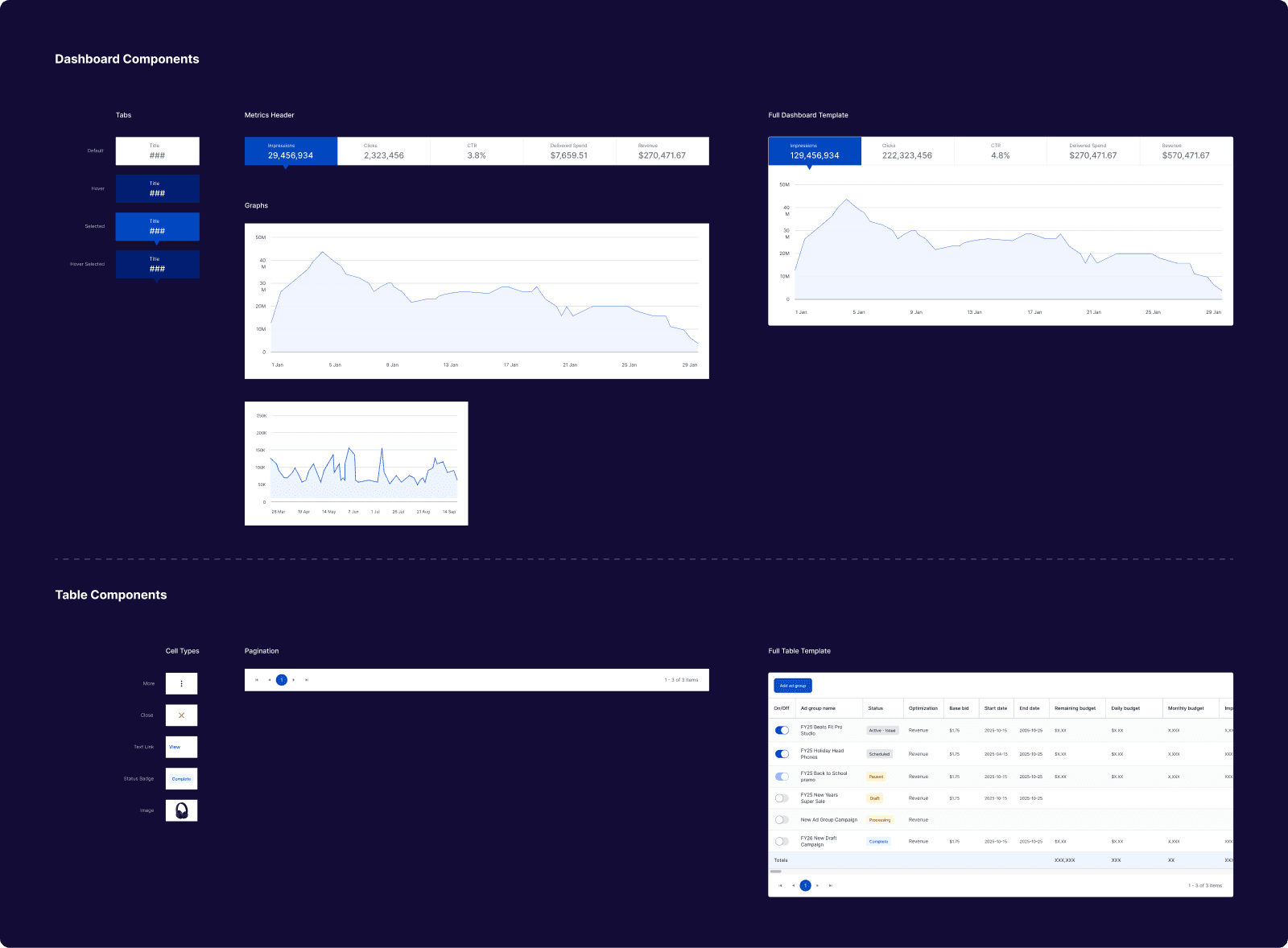
Rather than layering on additional features, the focus shifted to strengthening the platform’s structural foundation. I helped standardize dashboard layouts across campaign and product views, establishing predictable patterns that made navigation and comparison easier. By contributing reusable components aligned with Best Buy’s design system and refining information hierarchy, the experience surfaced key insights more clearly while enabling more efficient iteration across the platform.
Results
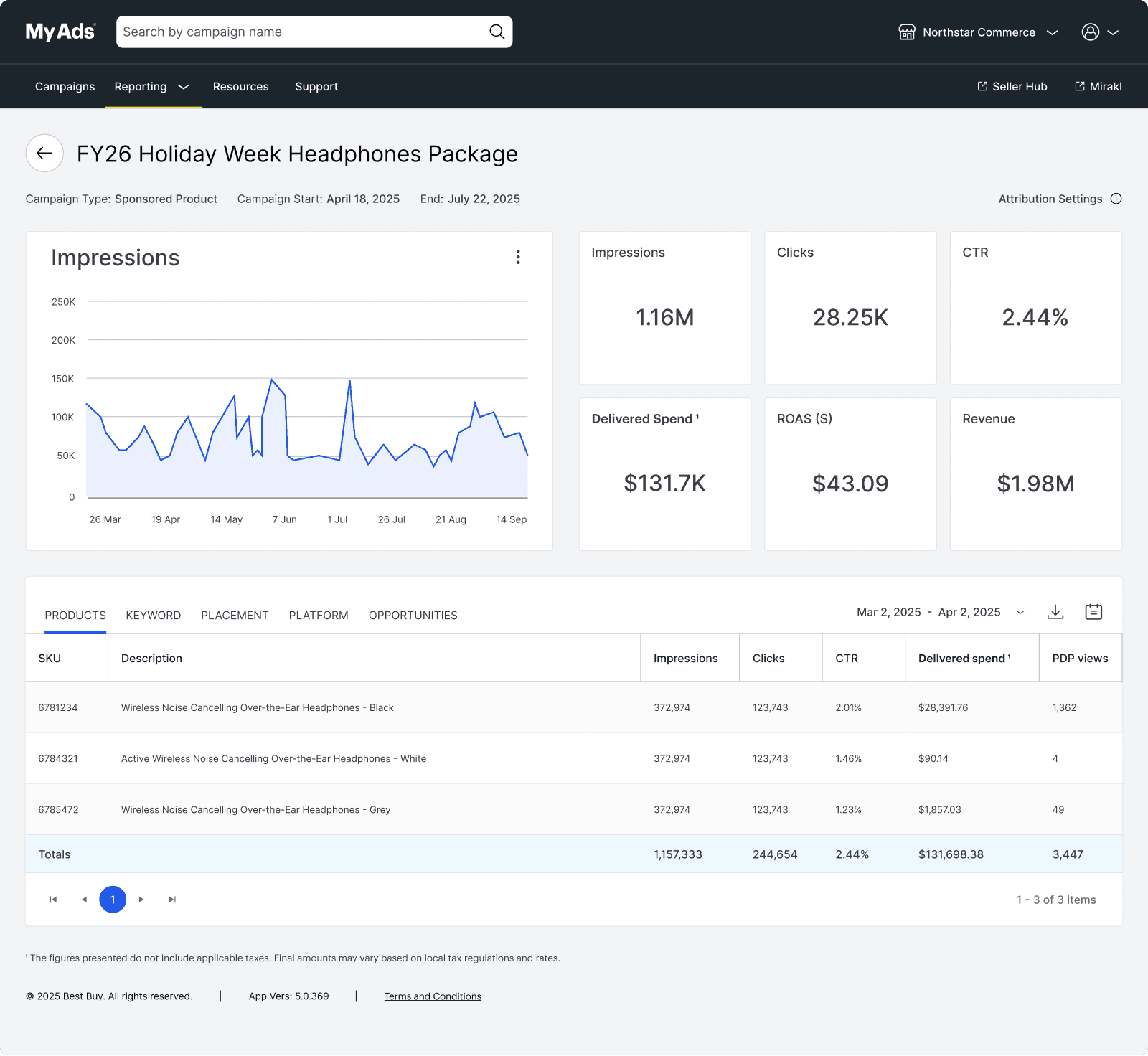
With consistent structure and clearer hierarchy, vendors could navigate dashboards more intuitively and assess campaign performance with greater efficiency. Moving between views no longer required relearning layouts, allowing vendors to focus on decision-making rather than orientation. At the same time, reusable patterns streamlined design and engineering workflows, making ongoing improvements faster and more reliable.
Impact
These changes strengthened the usability and scalability of a revenue-critical platform supporting Best Buy Marketplace. Vendors gained clearer workflows and greater confidence in managing campaigns, while internal teams benefited from a more maintainable and extensible system. By establishing a consistent structural foundation, the platform was better positioned to evolve alongside Marketplace growth.
Due to confidentiality, some details have been generalized. I’m happy to share more about the problem space, research insights, design process, and outcomes in conversation.