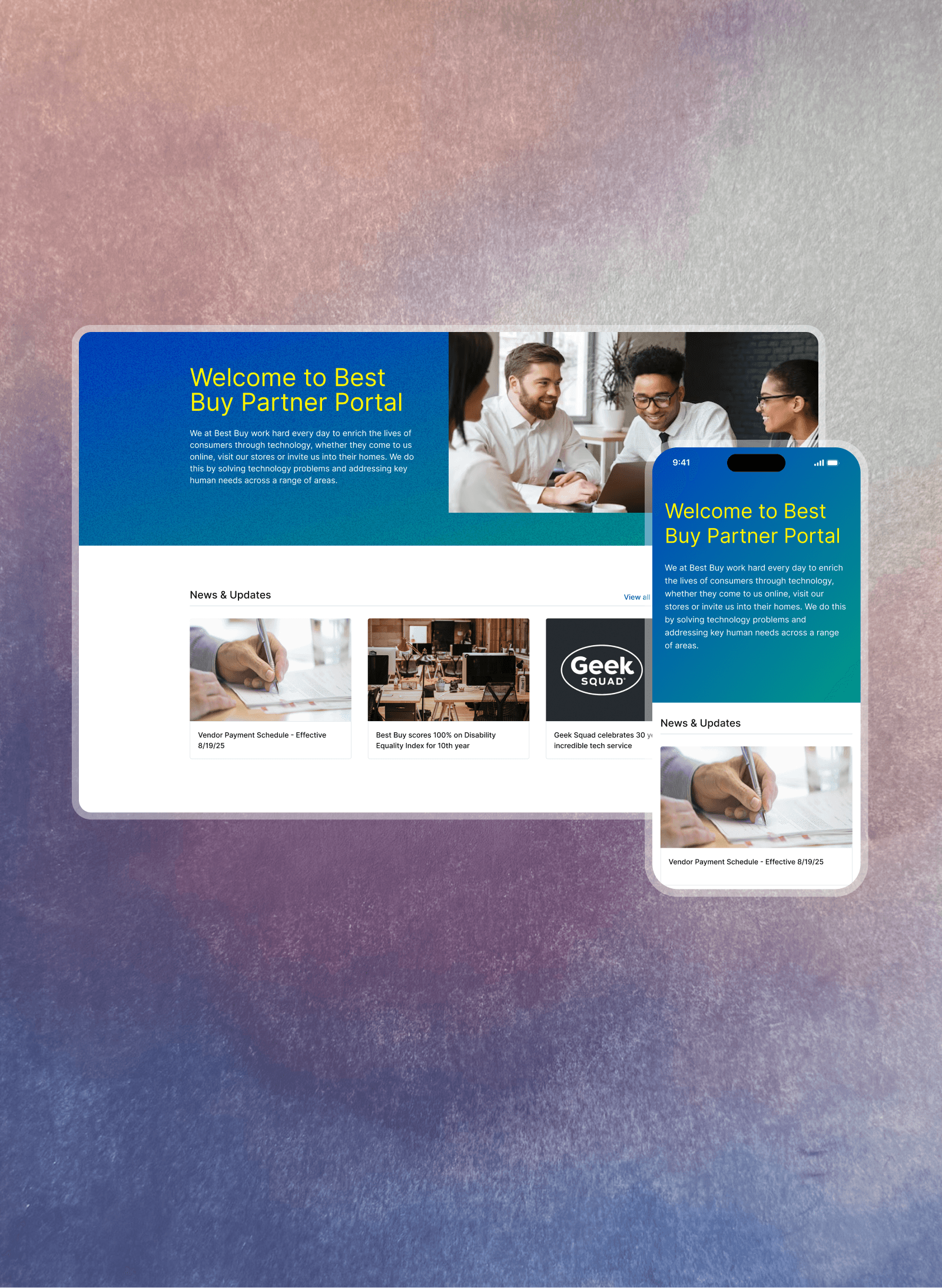
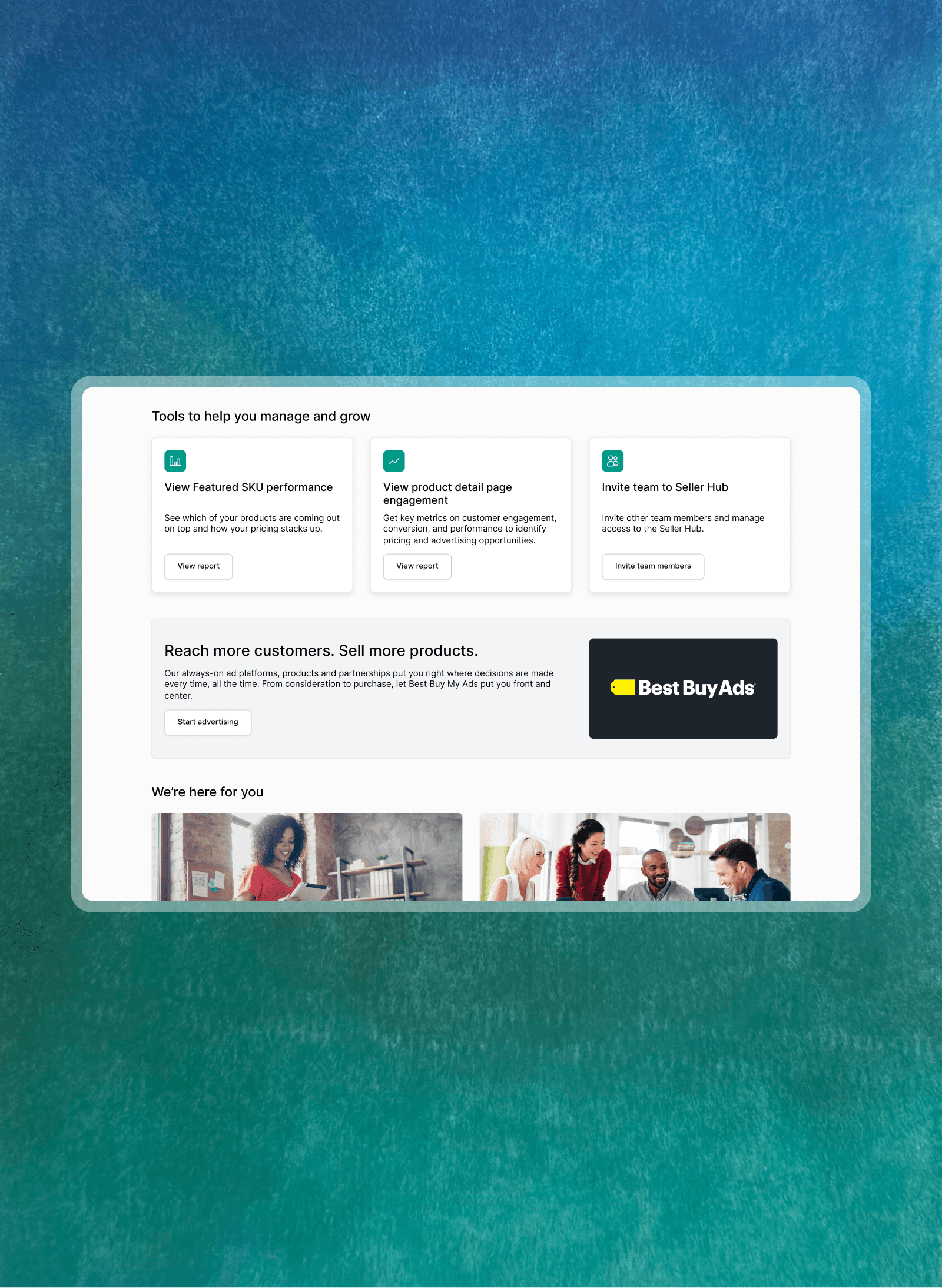
I bridged the gap between fragmented prototypes and a scalable enterprise system by standardizing hierarchical navigation and prototyping complex multi-tenant logic with AI for a global network of agencies.
CAMPAIGNS SUPPORTED
Brand Partners Supported
Reduction in design-to-dev handoff time

Client
Best Buy
Role
Product Designer
Timeline
March - October 2025
Problem Space
A system at the breaking point
As Best Buy Ads scaled to include over 600 brand partners, the internal ads tool hit a ceiling. It worked for small, independent sellers, but as enterprise agency partners managing millions in spend entered the ecosystem, two massive gaps emerged:
Infrastructure Debt
The UI consisted of fragmented, one-off screens. Without a centralized library, every new feature required custom design, which created significant bottlenecks in the product roadmap.
The Logic Ceiling
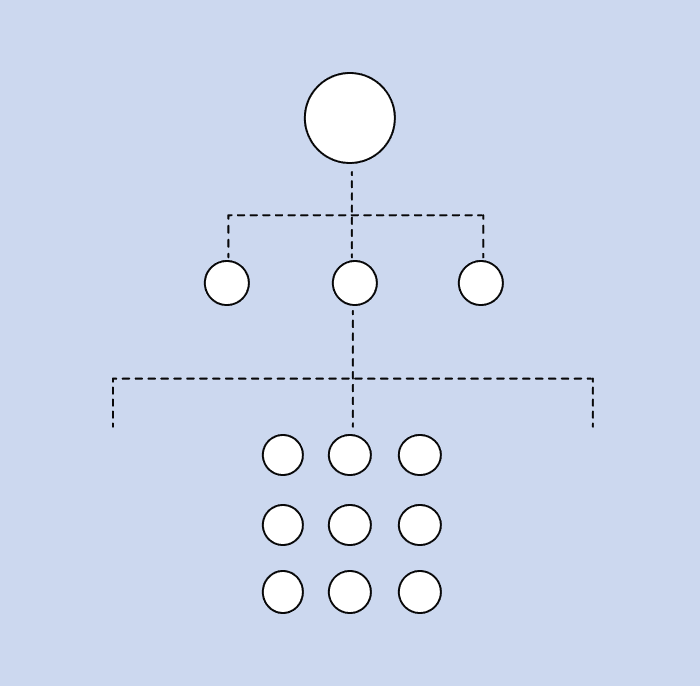
The original account model was built for one user managing one store. It lacked the hierarchy needed for large advertising agencies, who often need to manage dozens of different brands and thousands of products under a single "Parent" account.
Strategy
Two Parallel Workstreams
To move at the speed of a 2-week sprint cycle, I divided my focus into two distinct but foundational subjects. Click to jump to a workstream.
Standardizing the UI
Standardizing the UI to accelerate shipping
When I joined the team, the design files were a collection of one-off screens. Because there were no shared components, every small UI update required custom engineering. This infrastructure debt was the primary bottleneck preventing us from scaling the platform.
Mapping to BRIX
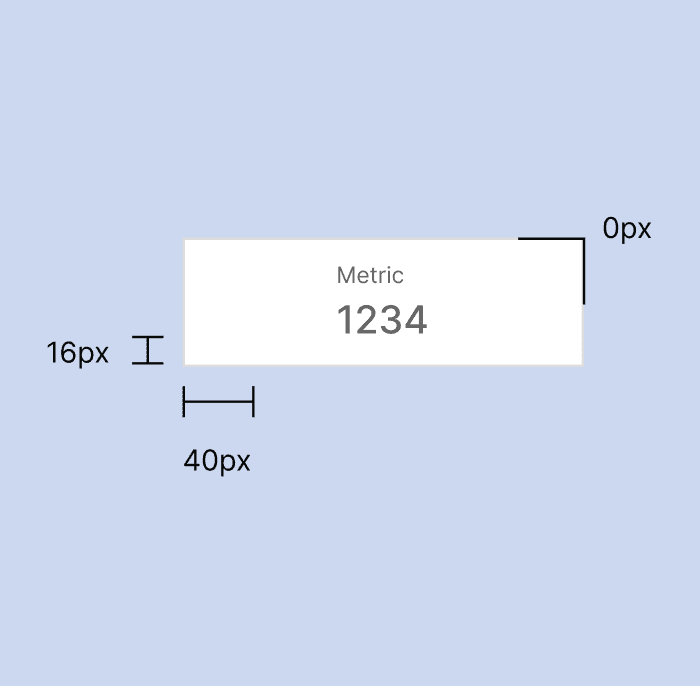
Best Buy already had a design system called BRIX, but it wasn't fully optimized for the data-heavy needs of an advertising dashboard. I took the lead on auditing our existing prototype and mapping our specific requirements (like complex data tables and the cells within them) back to the core BRIX library.
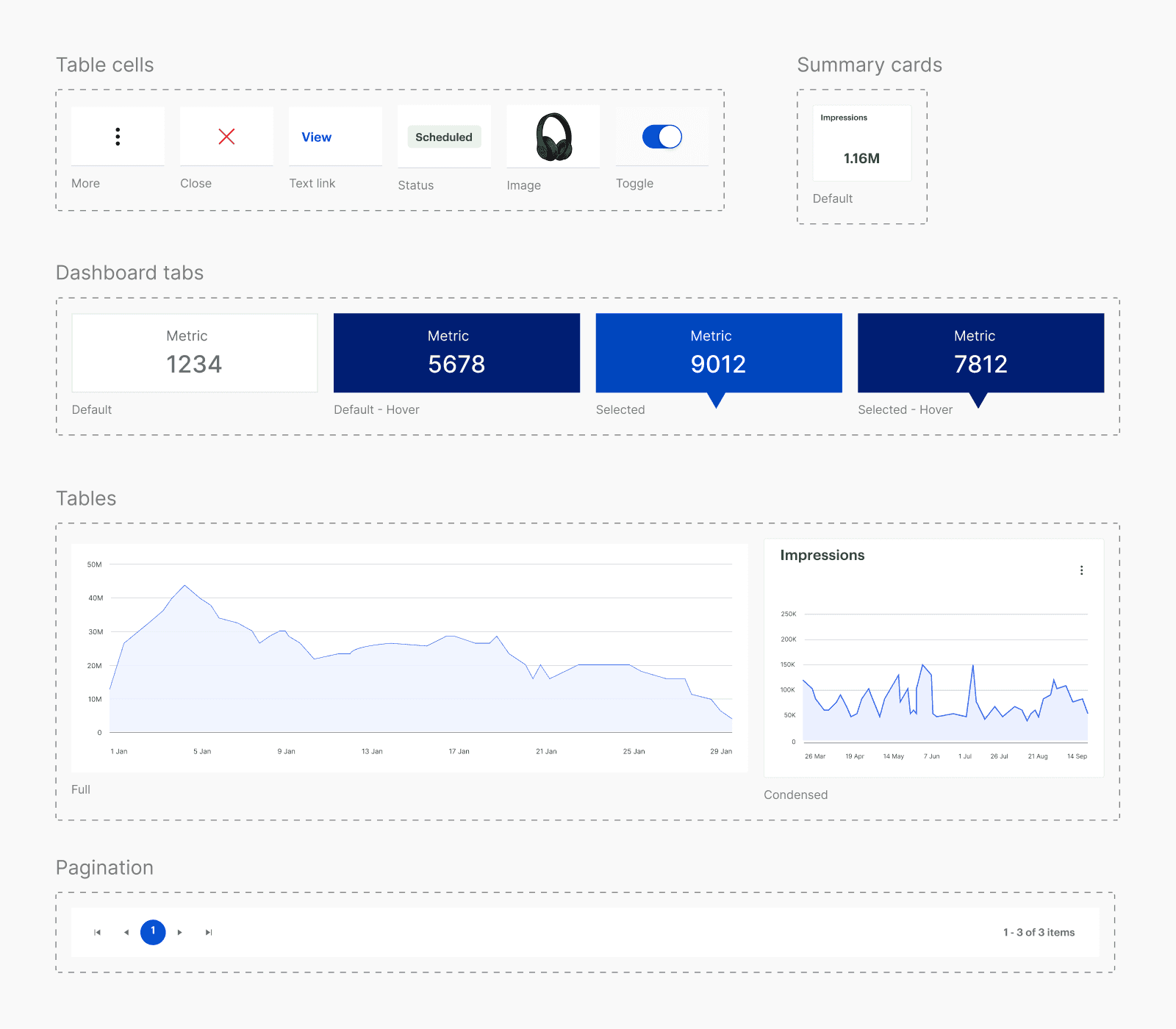
Standardizing Data-Heavy Patterns
I moved the team toward a page template approach. Whether a user was looking at a high-level strategy summary or a single product's performance, the experience now felt consistent and professional.
The Component Library: I built a specialized set of reusable UI parts—buttons, tables, and charts—that adhered to Best Buy’s brand standards.
The Result: By creating these "plug-and-play" components, we reduced the time it took to move from design to development by 30%.

Building the multi-tenant logic
Building the logic for multi-tenant management
While standardizing the UI, I also had to solve a deeper structural problem. The original tool was built for a single user managing a single store. To support large agencies, we needed a system that could handle layers of complexity.
Using AI to Rapid Prototype
To maintain our high velocity, my team and I integrated Figma Make into our workflow. We used it to rapidly generate diverse layout ideas and stress-test how different user journeys would work. This allowed us to discard "weak" ideas in minutes rather than hours, moving us toward a final solution much faster.
Designing the "Parent-Child" Hierarchy
Drawing from the high-density layouts we validated during the AI prototyping phase, I led the redesign of the account structure to support a Parent-Child model. This architecture allowed a single agency admin to manage dozens of distinct brands and thousands of products without the friction of multiple logins.
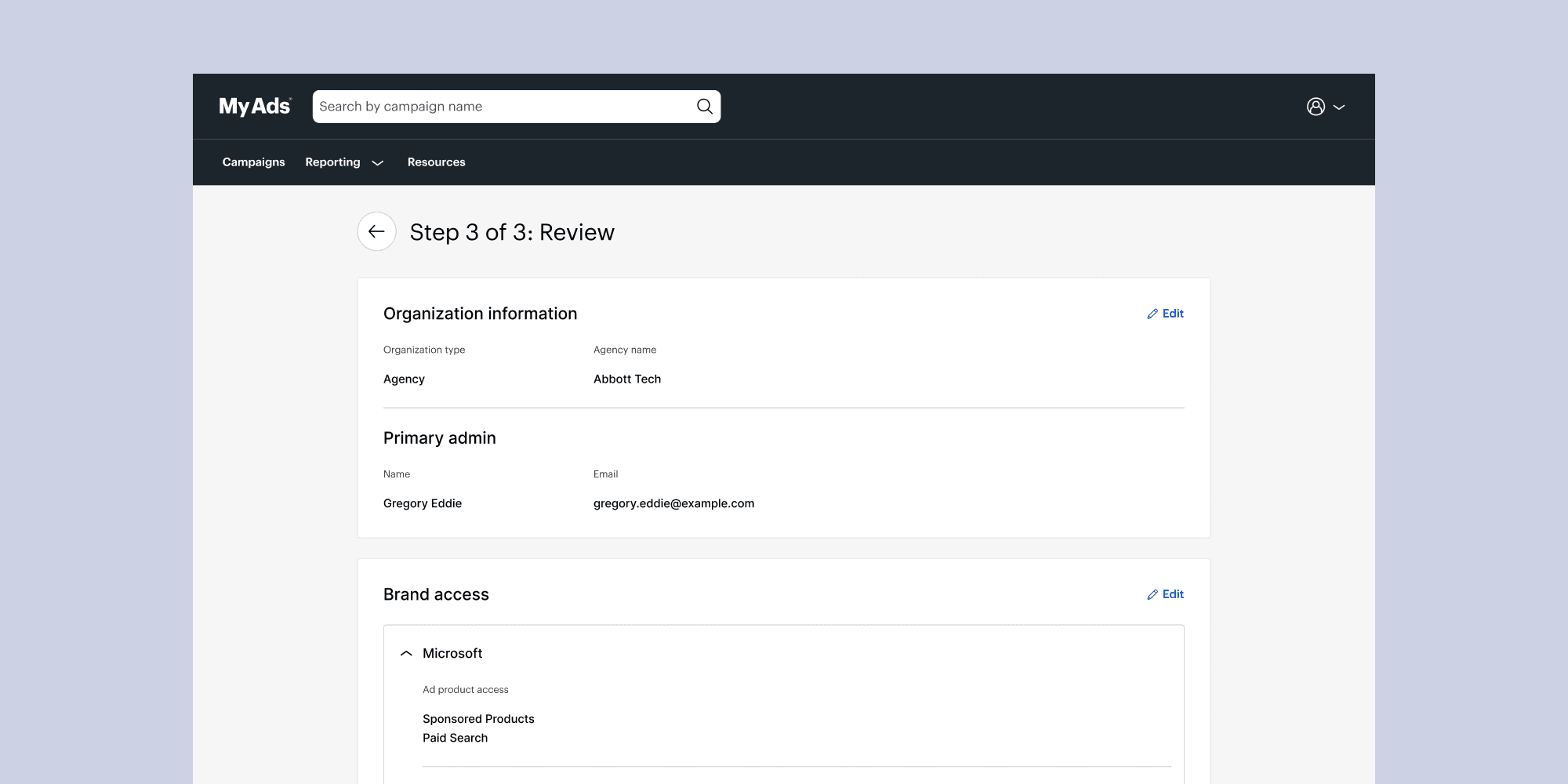
The Permissions Framework: To keep the interface from feeling overwhelming, I used progressive disclosure. We broke the user setup into three clear steps:
Identity: Who is this user?
Access: Which brands are they allowed to see?
Permissions: What specific actions can they take (e.g., viewing data vs. spending money)?

Safety-First Design
When users are managing millions of dollars in ad spend, the fear of error is high. I introduced a mandatory review step before any save, creating a simple but fail-safe environment that protected both the user and the business from expensive mistakes.
The Proxy-User Loop
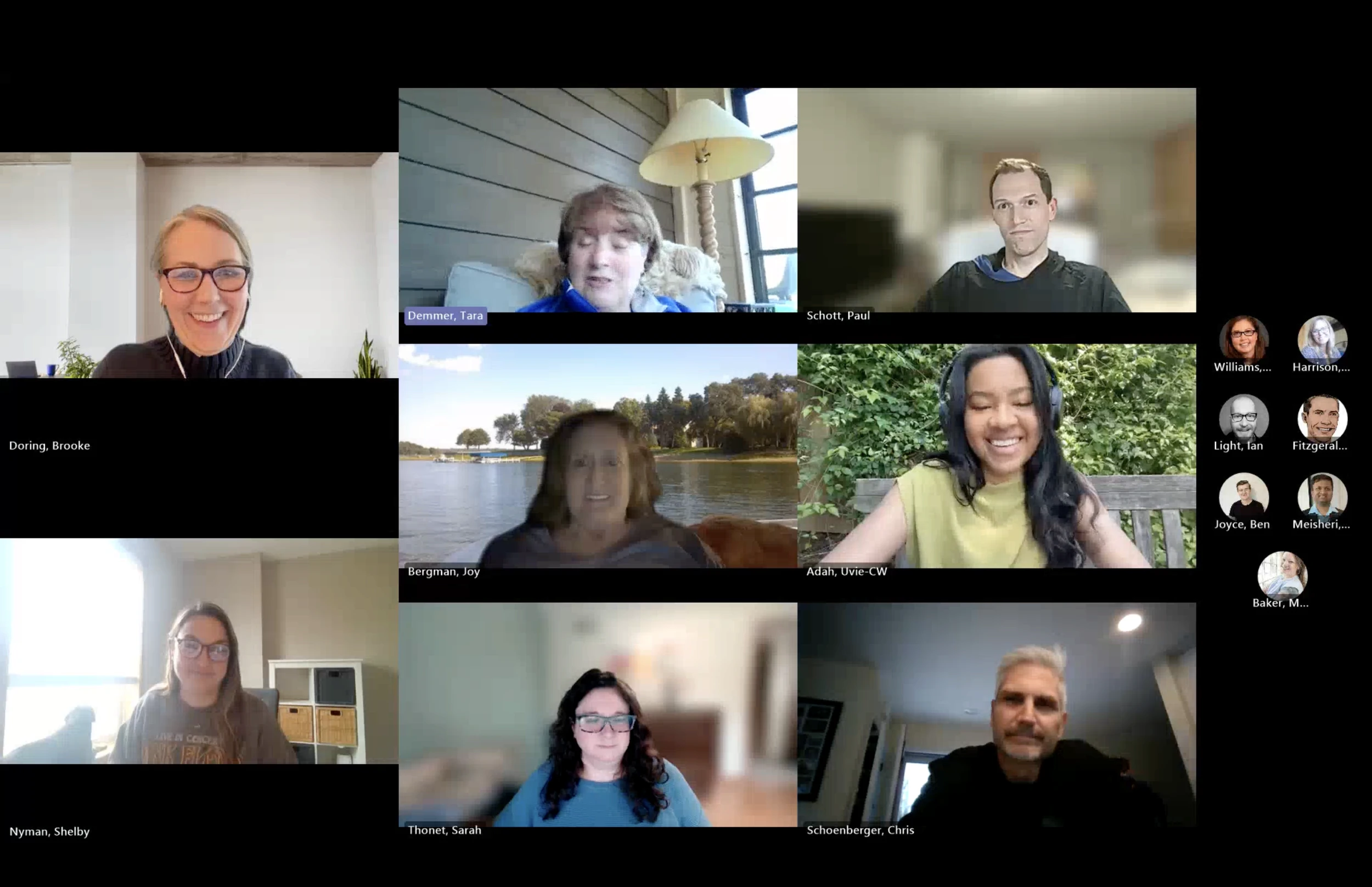
Because our 2-week sprints didn't allow for months of traditional field research, my team established a proxy-user loop. I met daily with our internal Ad Analysts—the experts who talk to our vendors every day—to stress-test my logic against the real-world problems they were seeing in the field. This allowed us to validate complex permissions and Parent-Child structures in real-time without slowing down development.
The Pivot
Aligning for MVP
Midway through the project, requirement creep threatened our 2-week sprint. Business stakeholders were requesting complex features that weren't essential for the initial launch.
The Scope Recalibration Meeting:
I initiated a strategic recalibration with Product and Engineering to reconcile these new requests with our technical timeline. By mapping out must-haves against nice-to-haves, I helped the team define a strict MVP that prioritized core account logic and data stability over secondary features.
The Result: We successfully launched on time. By pushing non-essential features to Post-MVP, we ensured the platform's core was bug-free and safe for launch.
Results
Translating System Logic into Market Success
The platform successfully onboarded its first wave of enterprise agencies, providing the technical infrastructure needed to manage high-volume retail media spend.
CAMPAIGNS SUPPORTED
Brand Partners Supported
Reduction in design-to-dev handoff time
What I Learned
Systems thinking is a business strategy.
Cleaning up the UI library wasn't just about aesthetics; it was the mechanical necessity that allowed engineers to scale the platform. I learned that a well-documented system is the most effective way to eliminate roadmap bottlenecks.
Friction can be a feature.
In high-stakes enterprise tools, the goal isn't always to reduce clicks. Adding a mandatory 'Review' step was a deliberate choice that built user trust and prevented expensive administrative errors in a high-pressure environment.
Research requires adaptability.
When traditional field research isn't an option due to tight sprint cycles, internal experts are an invaluable asset. Establishing the proxy-user loop taught me how to gather high-fidelity feedback without compromising project velocity.
Defining boundaries protects quality.
The "Boundary Alignment" meeting taught me the importance of being a facilitator, not just a designer. By bringing stakeholders together to define the MVP, we ensured the final product was stable and "safe" for launch rather than being bloated and buggy.
Credits
Design
Uvie Adah –– Product Designer
Mike Johnson –– Lead Product Designer
Katy Hale –– Sr. Product Designer
Brooke Doring –– Sr. Product Designer
Brandi Howell –– Product Designer
Jenna Roe –– Sr. Product Design Manager
Product
Will Stark –– Product Manager
Deepti Chaturvedi –– Product Manager
Amrita Nandi –– Sr. Technical Program Manager